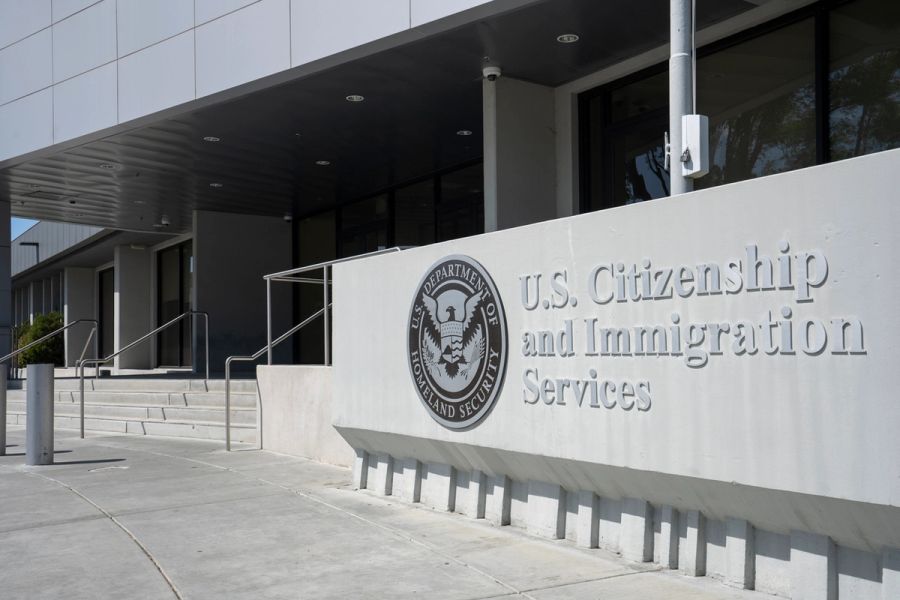
U.S. Citizenship and Immigration Services (USCIS) is planning to revise Form I-140G, the petition used to request a Trump Gold Card. A new 60-day notice published on the Federal Register invites the public to comment on the proposed changes.
The draft edition can be found here. It includes several changes to the form itself, including the deletion of a question which asked applicants to select a Green Card category.
Changes made in the Form I-140G proposal
As of March 2026, the current I-140G petition allows applicants to select between the EB-1A and EB-2 NIW category. This option got removed in the suggested edition.
USCIS also expanded the number of funding prompts found in Form I-140G. If this version goes into effect, Gold Card petitioners would have to provide more information about the accounts they’re using to pay the $1 million (or $2 million) gift to the U.S. Department of Commerce. They may also need to fill out a more comprehensive questionnaire about the source of their funds, including whether any of it comes from gift donors or lenders.
In addition, the proposed I-140G edition makes several changes to how much information applicants submit about their dependents. Two new sections are dedicated for spouses and children requesting a Gold Card, such as their employment and education history. Petitioners must also answer basic questions about minors who are not sponsored by their parent’s filing.
Other notable modifications to Form I-140G include:
- A disclaimer that states gifts should be addressed to the U.S. Department of Commerce.
- A note that says the separate $15,000 processing fee must also be paid to the Department of Commerce.
Manifest immigration attorney Ana Gabriela Urizar notes that most of these edits have not gone into effect, and do not affect the eligibility requirements for the Gold Card program. “From my perspective, the proposed expansion to the spousal and children section signals that the federal government may be increasing scrutiny towards a Gold Card applicant’s entire family,” she says. “If implemented, this may affect which dependents remain eligible to be included alongside the initial I-140G petition.”
About the Author

Staff Writer
Caryl Espinoza Jaen is a Nicaraguan-born staff writer for Manifest Law. As a writer, he strives to cover complex topics like immigration policy with clarity, accuracy, and precision.
Read bioReviewed By

Immigration Lawyer to Manifest Law
Ana Gabriela Urizar is an award-winning immigration attorney licensed in Arizona and New York. With nearly a decade of experience, she advises global corporations on complex U.S. immigration matters. Originally from Guatemala, Ana Gabriela previously spent close to ten years at the world’s largest immigration firm, managing business immigration matters for leading technology, science, and financial companies. She has been recognized by Best Lawyers: Ones to Watch and Negocios Now’s Tri-State 40 Under 40.
Read bioShare this article: